
Drive Growth with Expert Digital Marketing Services
Discover how digital marketing services fuel business growth. Learn strategies like SEO, PPC, social media, and content marketing in this guide.
The digital world has transformed how businesses operate and connect with customers. Today, digital marketing is not just an option - it is a necessity. From small startups to global enterprises, every business needs effective digital marketing services to grow, compete, and thrive in the modern marketplace.
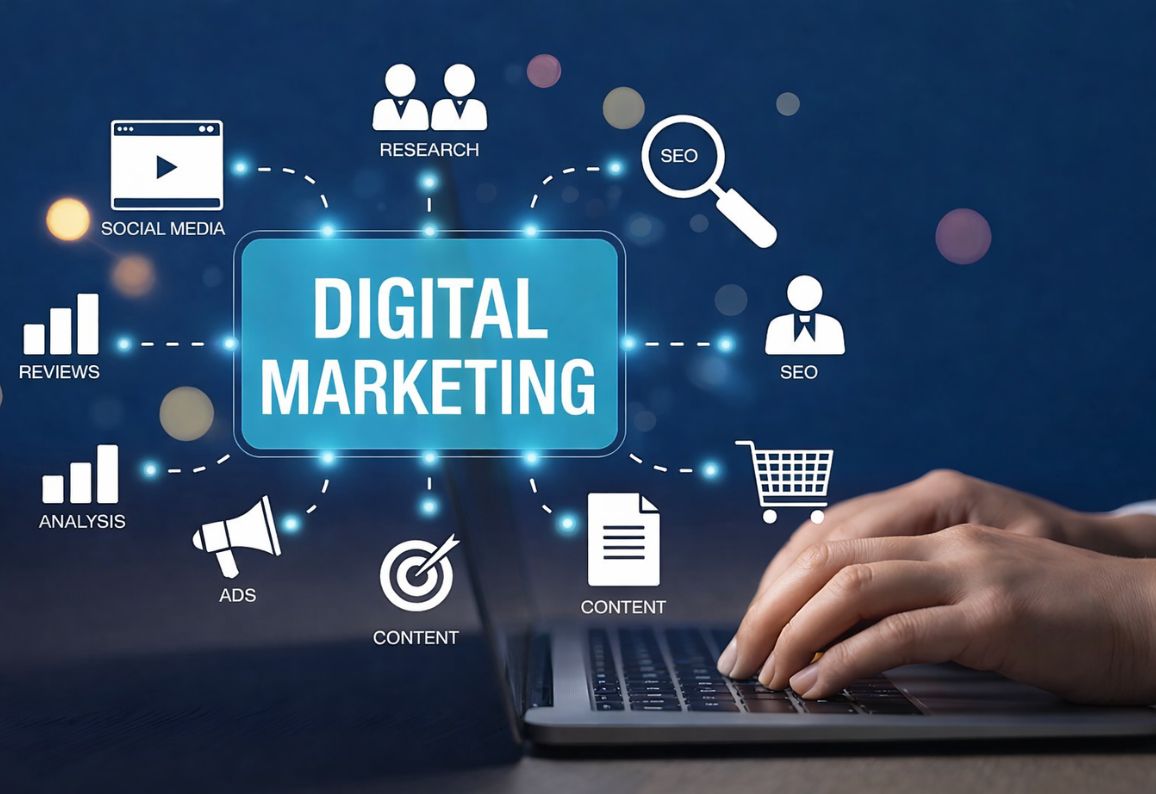
In this blog, we will explore the wide landscape of online marketing and internet marketing. You’ll learn about different services like SEO services, PPC marketing, social media marketing, email marketing, content marketing, affiliate marketing, and more. We’ll also cover platforms like Google Ads, Facebook marketing, and Instagram marketing, along with strategies for crafting a successful marketing strategy in today’s digital age.
By the end, you’ll have a clear roadmap of how to use digital advertising, SEO optimization, and paid campaigns to unlock real business growth.
Digital marketing (also called internet marketing or web marketing) is the promotion of products and services using online channels. Unlike traditional advertising, digital marketing leverages platforms like search engines, social media, email, and websites to reach highly targeted audiences.
Key benefits of digital marketing include:
Global reach with low cost.
Targeted audience segmentation.
Real-time performance tracking.
Higher engagement and conversion rates.
Businesses today rely on multiple digital marketing services to build visibility, attract customers, and generate sales. Let’s explore each of them in detail.
1. SEO Services
SEO services (Search Engine Optimization) improve your website’s visibility on search engines like Google. With proper SEO optimization, businesses can rank higher, attract organic traffic, and build trust.
Components of SEO include:
On-page SEO (content, meta tags, keywords).
Off-page SEO (backlinks, brand mentions).
Technical SEO (site speed, mobile-friendliness).
2. PPC Marketing
PPC marketing (Pay-Per-Click) is a paid advertising model where you pay only when users click your ad. The most popular form is Google Ads, which ensures instant visibility for targeted keywords.
Benefits:
Immediate traffic.
Highly targeted audience.
Scalable campaigns.
3. Social Media Marketing
Social media marketing involves using platforms like Facebook, Instagram, LinkedIn, and Twitter to connect with audiences.
Facebook marketing: Build brand awareness and run targeted paid campaigns.
Instagram marketing: Use visuals, reels, and influencer collaborations to engage audiences.
4. Email Marketing
Email marketing is one of the oldest yet most effective strategies. It helps nurture leads, deliver personalized offers, and build customer loyalty.
5. Content Marketing
Content marketing involves creating valuable blogs, articles, videos, and infographics to attract and engage customers. High-quality content boosts SEO and builds brand authority.
6. Influencer Marketing
Influencer marketing leverages trusted individuals to promote your brand. By collaborating with influencers, businesses can reach niche audiences quickly.
7. Affiliate Marketing
In affiliate marketing, partners promote your products for a commission. It’s a cost-effective way to expand reach and generate sales.
8. Search Engine Marketing
Search engine marketing (SEM) combines SEO and PPC to maximize visibility on search engines. While SEO drives organic results, PPC provides paid exposure.
Digital advertising plays a crucial role in scaling online campaigns. Platforms like Google Ads and social media ads allow for precise targeting, ensuring businesses reach the right people at the right time.
Popular paid advertising channels:
Google Ads (search ads, display ads, video ads).
Facebook marketing (audience targeting, remarketing).
Instagram marketing (stories, reels, shoppable posts).
Paid advertising ensures faster results than organic strategies.
A well-structured marketing strategy combines multiple digital marketing services for maximum impact.
Steps to build a strategy:
Define clear goals (traffic, leads, sales).
Identify target audiences.
Choose the right mix of SEO, PPC, and social media.
Create valuable content.
Monitor and optimize with analytics.
Measurable Results: Track campaigns in real time.
Cost-Effective: Lower cost than traditional advertising.
Targeted Reach: Reach specific demographics.
Flexibility: Adapt campaigns instantly.
High ROI: Better returns compared to offline channels.
At the heart of internet marketing lies content and SEO. By focusing on SEO optimization and high-value content, businesses can:
Improve search engine rankings.
Build authority with blogs and case studies.
Drive organic traffic without heavy ad spend.
With billions of users, social platforms are vital for digital advertising.
Facebook marketing reaches broad demographics.
Instagram marketing engages younger audiences.
Influencer marketing builds trust and authenticity.
Social media marketing increases brand awareness, engagement, and customer loyalty.
Despite new platforms, email marketing remains highly effective. Businesses use it for:
Lead nurturing.
Promotions and discounts.
Customer retention.
Personalized and automated email campaigns enhance engagement.
Content marketing and affiliate marketing are powerful long-term growth drivers.
Content builds authority and attracts organic traffic.
Affiliates expand your reach with minimal upfront cost.
Combining both strategies can multiply business growth.
The digital landscape keeps evolving. From AI-driven digital advertising to data-driven personalization, businesses must stay ahead by constantly refining their marketing strategies.
Emerging trends include:
Voice search optimization.
Video-first campaigns.
Data-driven personalization.
Omnichannel marketing.
Digital marketing services are essential for unlocking business growth in today’s competitive marketplace. From SEO services to PPC marketing, from social media marketing to email marketing, every strategy plays a role in building visibility and revenue. By combining organic strategies like content marketing with paid channels like Google Ads and Facebook marketing, businesses can achieve scalable results.
To thrive in the digital age, businesses must embrace a balanced approach that integrates all aspects of online marketing and digital advertising.
📞 Call us: +91‑8587000904, 8587000906, 9643424141
🌐 Visit: www.cyberinfomines.com
📧 Email: vidhya.chandel@cyberinfomines.com